Gas stove
Existing paperwork may identify natural gas or propane and a particular model designation. Include that information in the enquiry. The visible legs, pedestal or cast casing do not identify the internal control system.

A fireplace that will not ignite, switches off unexpectedly, or stops responding to its controls needs a diagnosis before anyone chooses a part. Efficient Fireplace Services takes repair requests in Mission. Tell us what changed and where the property is so we can confirm scheduling.
Start with the broader gas fireplace repair overview. If the unit works normally and you need planned care, see service and maintenance; if a replacement is the better question, review installation and replacement.
A repair assessment makes sense when ignition, flame, heat or controls behave differently than they used to. A clicking unit, unreliable pilot, early shutdown, unresponsive wall switch or unusual fan operation can have different causes. Report the behaviour and model if known; the cause should be checked on site.
Does it click, show a pilot, or stay completely silent? Note what the remote or wall control displays and when the problem began. Avoid opening sealed components or altering gas fittings to test a guess.
Tell us whether the pilot or main burner goes out and whether the shutdown occurs immediately or only after operation. This distinction helps plan the assessment without treating a symptom as a diagnosis.
Share whether the wall switch, remote, thermostat or fan is affected. If more than one control is involved, mention that; model-specific control arrangements and compatible parts vary.
Do not keep using a fireplace that appears unsafe. For a suspected gas leak or gas odour, leave the area and follow FortisBC emergency guidance; call from outside.
The technician starts with the reported behaviour, appliance identification and a model-appropriate inspection. Findings can point to a control issue, ignition component, airflow or another cause; they cannot be confirmed from a symptom alone. The next decision depends on safe operation, compatible parts and the work required.
Replacement is worth discussing when a safe repair cannot be supported, the correct component is unavailable, or the appliance no longer fits your needs. A single fault does not automatically justify a new fireplace. Compare the confirmed repair scope with the full replacement project, including site fit and surrounding work.
Our fireplace parts guide explains why a similar-looking component is not enough to establish compatibility. If replacement is the route, start with the installation scope before ordering a unit.
A freestanding gas stove is a complete gas appliance, even when its styling resembles a traditional wood stove. Its model, fuel and vent arrangement determine the relevant repair information. Describe the installed product accurately before selecting a service route, and leave unfamiliar components undisturbed while that identity is established.
Existing paperwork may identify natural gas or propane and a particular model designation. Include that information in the enquiry. The visible legs, pedestal or cast casing do not identify the internal control system.
State the fuel category when known. A gas repair appointment should not be arranged on the assumption that every stove-shaped heater is gas. Ask for the appropriate service route when the appliance belongs to another category.
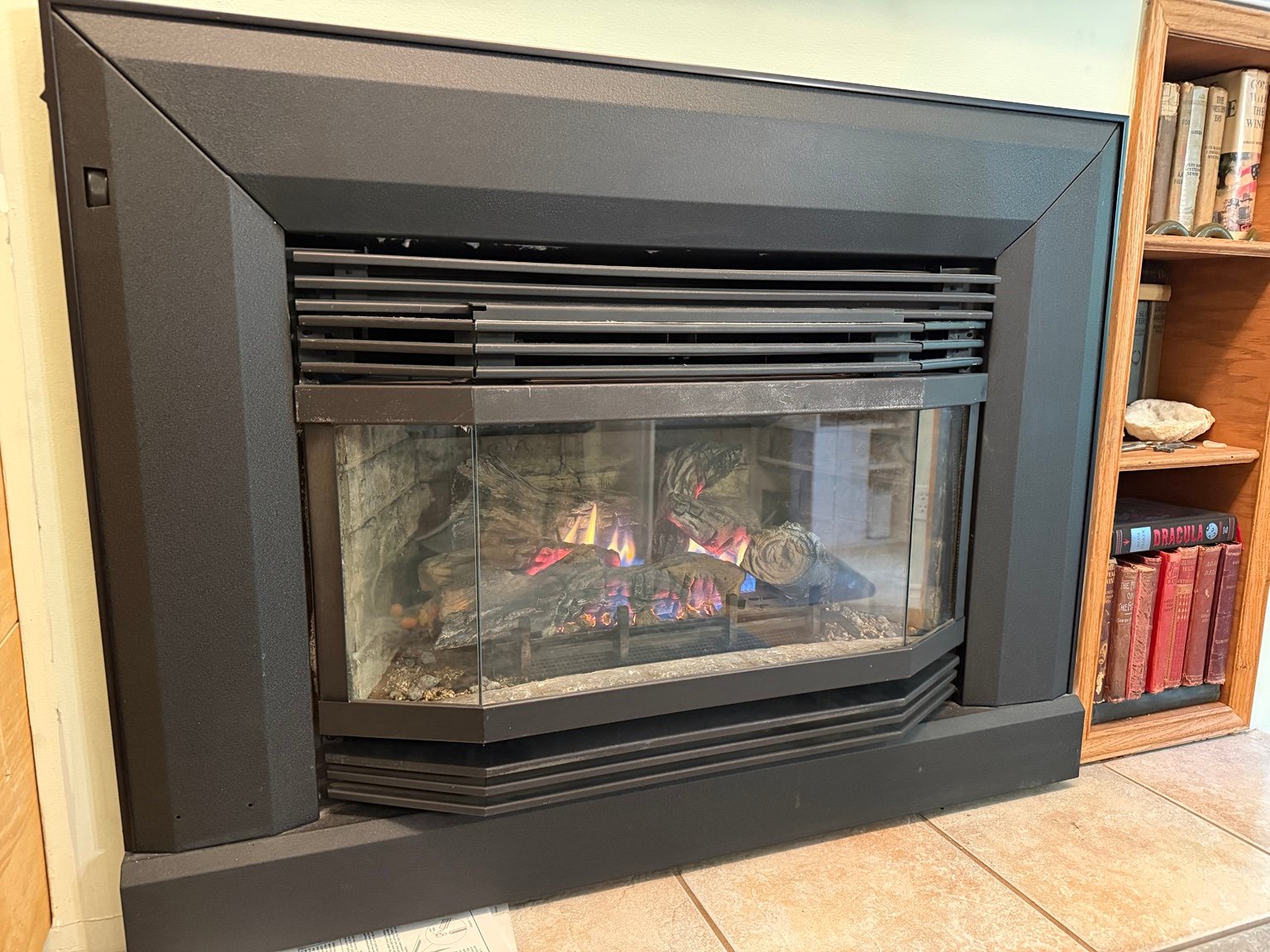
If the appliance is installed within a wall or an older fireplace opening, describe that instead. A room photograph from a safe distance can clarify the format without removing a panel or touching connected equipment.
Regency’s gas stove buyer’s guide illustrates freestanding gas appliances and different venting approaches. Use the instructions for the installed model when discussing repair; a product family name alone does not identify every applicable component.
An operating complaint might involve failed ignition, interrupted operation or a changed accessory response. Those observations help plan assessment, but they do not determine which part needs replacement. Avoid adding a guessed diagnosis when the history is uncertain.
Freestanding does not mean movable while connected. A gas stove depends on its documented connections, support, clearances and venting arrangement. Tell us about recent room changes or movement of the appliance. Do not reposition it to gain access, improve its appearance or test whether an operating problem changes.
Describe new furniture, shelving, flooring or finishes near the stove. The original installation space and the current room may differ. The relevant clearances must remain those required for the fitted product, not a distance estimated from another stove online.
If the unit was shifted during building work, disclose that even if it appears to have returned to its original position. The assessment may need to consider the connections and installation condition as well as the reported operating fault.
Describe steps, narrow doorways or the route to the room. Clear ordinary loose belongings only where doing so is safe. Do not move a connected appliance, remove vent sections or dismantle protective parts to prepare for the visit.
A stove’s visible pipe may be mistaken for the chimney connection used by a wood stove. Its appearance is not enough to identify the approved gas vent system. The technician needs the documented arrangement and actual installation condition before proposing related work.
Natural gas and propane configurations need the correct identification and approved components. A Mission address or a nearby tank does not establish the fuel used by a particular stove. Pass along reliable appliance paperwork and disclose any known conversion or supply change without attempting to alter the gas system yourself.
The full model designation and any documented conversion record
Do not assume: That an old manual describes every later change
The existing work record and who completed it
Do not assume: That every component in the original parts list remains applicable
State that uncertainty before scheduling
Do not assume: That a rural location automatically means propane
A supply-related concern and an appliance fault can require different responses. Tell us if a gas supplier has already attended and provide the relevant conclusion, but do not extend that report beyond its stated scope. A supply visit does not necessarily document the condition of the stove.
Do not adjust a regulator, exchange an orifice or use a conversion kit as a troubleshooting experiment. Such work requires the correct professional process and documentation. Our initial enquiry should establish the appropriate assessment, not guide an owner through fuel-system modification.
Parts enquiries should distinguish the operating system from the stove’s exterior and optional equipment. A damaged cast panel, an ignition complaint and a failed fan are different scopes. Ask for the identified component, compatibility information and associated labour rather than purchasing a generic stove part by appearance.
These must match the actual model and fuel configuration. An ignition symptom does not prove that a familiar sensor is at fault. Request the assessment finding and the supported repair option.
The door or glass assembly has specific requirements. A stove-like appearance does not mean the glass can be handled like a wood-stove window. Keep damaged equipment out of operation until the appropriate remedy is established.
Some visible parts support, cover or locate other components. Explain which item is damaged and avoid assuming it is purely decorative. A matching colour is not evidence that a replacement fits or performs the required function.
State whether a fan is actually fitted. A catalogue option is not proof that your unit includes it. Identify the accessory before comparing replacement motors, controls or complete assemblies.
The installed system governs the appropriate component. A stove pipe from another appliance is not a universal replacement. Any connection work should be clearly included in the scope and checked on completion.
Older product generations may require additional supply research. Ask whether the quoted part is confirmed available, whether the price includes all associated items and whether a return visit is expected. If a supported repair cannot be established, a replacement proposal should explain why.
Our fireplace parts guide explains identification and compatibility questions before a replacement component is ordered.
A brand name helps begin an enquiry, but it does not identify the fuel, appliance format or fitted controls. Give the complete model designation from existing records and describe the current fault. Efficient Fireplace Services considers all gas-fireplace brands; repairability and component availability remain specific to the installed unit.
Keep the stove model separate from Regency fireplace or insert names. If an old invoice lists only the manufacturer, say that the identification is incomplete. Our Regency service and repair information offers a related starting point.
Specify the fuel and format from existing records. A reference to an Enviro stove can otherwise leave the service category unclear. The installed gas product requires its own documentation and compatible component list.
Traditional styling is not a reliable way to identify the operating system. Provide the exact product designation from the manual or service record and ask whether the required gas appliance assessment is available.
See our fireplace brand support hub for related information. These examples do not imply manufacturer authorization, stocked parts or guaranteed acceptance of every model.
Cedar Valley, Hatzic, Silverdale, Ferndale, Stave Falls and Steelhead give useful location context. The service enquiry still needs the specific address, room and access route. Do not infer fuel, venting or appliance age from a neighbourhood name; each installed stove or fireplace must be identified on its own facts.
For a stove in an occupied family room or secondary living area, explain which entrance reaches the appliance. Identify the person who can provide the operating history rather than relying solely on whoever opens the door.
If the home contains several heating appliances, name the room and the product needing repair. A freestanding stove and a built-in gas fireplace at the same address may need different documentation and repair scopes.
Tell us whether construction or renovation is underway near the appliance. Keep planned alterations separate from the current fault so that the immediate assessment and any later project can be priced clearly.
Describe any access restrictions and the known fuel information. A property with an outbuilding or more than one living space needs a clear service location; the mailing address alone may not identify the appliance room.
For a unit used only occasionally, state when it last operated normally and whether a previous fault remained unresolved. Seasonal use does not identify the cause of a new ignition problem.
Provide practical arrival details and the installed model if known. We do not assume propane, a particular brand or a specific vent configuration from the area’s rural setting. Confirm attendance arrangements for the exact address.
Mission’s official community engagement material includes these locality names. The examples above explain useful booking details; they are not claims that every local home has the described layout.
We provide on-site gas fireplace repair in Mission and across the Lower Mainland. For strata or managed properties, identify who arranges access and who can approve work. See our service areas for wider coverage.
A repair estimate should connect the identified fault to the proposed work and explain any installation concern that remains. Ask about assessment charges, confirmed parts, access and completion checks. If the appliance cannot be returned to use, request the reason and the available next step in plain language.
Before attendance: clarify whether the visit accepts the specific gas stove model and what the assessment charge covers.
Before ordering: establish the part description, supply status and any associated items needed for the repair.
Before completion: confirm the agreed work, any unresolved condition and the documentation you will receive.
For ordinary upkeep, see gas fireplace service. If a new appliance becomes the appropriate option, our installation information provides a separate project enquiry. A replacement should be assessed against the room and intended use rather than selected by exterior size alone.
For a working appliance needing planned care, see service in Mission. If a new unit is the appropriate next step, review Mission installation and replacement.
Send the Mission address, a short description of the fault, the brand and model if known, and a good contact number. Mention whether the unit fails every time or intermittently, and whether it was recently serviced. These details support scheduling and preparation; they do not replace an on-site diagnosis.
We work with homeowners, strata and property management. Efficient Fireplace Services offers a one-year workmanship warranty on completed repair work; parts and equipment follow the applicable manufacturer warranty terms. For information about supported makes, browse our fireplace brands hub. All brands can be considered for service, but repairability and parts availability remain model-specific.
Freestanding gas appliances raise practical questions about movement, fuel and visible stove components. These answers help Mission owners describe the product accurately and avoid buying an unsuitable item. The appropriate professional assessment and the installed model’s documentation remain the basis for deciding repair work and any return to use.
No. Gas appliances can use traditional stove styling. Identify the fuel and model through reliable paperwork or professional assessment. Do not add wood or any other material to a gas appliance because it resembles a wood stove.
Do not move connected equipment as an owner preparation step. Movement can affect gas or vent connections and the installed arrangement. Discuss access with the service provider and leave the appliance in place.
No. Location does not establish the fuel of an individual appliance. State what the appliance records show, disclose any known conversion and say when the fuel is uncertain so it can be identified correctly.
Not without identifying its role and the appliance condition. A support item may affect stability or the documented installation. Keep the unit unused when its support is damaged and arrange assessment of the correct replacement scope.
No assumption of interchangeability is appropriate. The gas appliance requires its approved venting arrangement. Have the installed system identified before related work, and do not substitute a pipe because its diameter looks similar.
Yes, if you have one. It helps explain documented changes that may affect the applicable components. The record still needs to be considered alongside the actual appliance; it is not a substitute for assessing the present fault.
No. First establish whether the stove supports that accessory and what concern is being addressed. A fan upgrade is different from correcting an operating fault or assessing whether the appliance suits the room.
That requires a new installation review. The replacement product may have different connection, support, clearance and venting requirements. Similar styling or footprint does not establish that the old arrangement can be reused unchanged.
It depends on the fault, access and the correct part. A diagnosis may identify work that needs a compatible component or a separate appointment. No first-visit fix or part inventory is promised.
We can discuss the symptoms and try to identify the unit during assessment. Work depends on safe condition, identification and availability of compatible components; not every older unit is repairable.
Describe the no-light fault when contacting us. Planned maintenance covers cleaning, inspection and operational checks; a known failure calls for a diagnostic repair discussion. See the maintenance overview for a working appliance.
Yes. Provide the unit address, resident or access contact, appliance details and the person authorized to approve work. Confirm building access arrangements in advance so the fault can be assessed at the right fireplace.
Further general questions are answered on our fireplace FAQ.
Call, text or email the address, appliance details and what changed. Say whether the fireplace will not start, shuts down, or has a control issue, and identify the person who can arrange entry. We can then discuss the suitable assessment and confirm availability for your Mission property.